ELFA Cleaning LTD brings trade-level advice to UK households so you can achieve a professional finish at home. This short guide shows the best way to get a streak-free shine using safe solutions and simple tools.
Start dust-free, use a microfibre cloth and avoid abrasive sponges or bleach. Spray a suitable glass solution and wipe in S strokes or straight passes until the product disappears. For stubborn spots such as hairspray or makeup, dab rubbing alcohol with a cotton bud.
We include a DIY recipe of equal parts distilled water and white vinegar plus a tablespoon of corn starch, and an anti-fog mix with a drop of dish soap. Learn when to call our teams for large glass areas or persistent issues.
Key Takeaways
- Use a microfibre cloth and a light touch to prevent scratches and backing damage.
- Start on a dust-free surface and wipe in controlled passes for streak-free results.
- DIY solution: distilled water, white vinegar and corn starch is effective and inexpensive.
- Avoid bleach and harsh products that harm edges and finishes.
- For anti-fog try a simple water, vinegar and dish soap mix, or consider demister mirrors.
- Call ELFA Cleaning LTD for large glass areas or trade-level results.
Why clean mirrors the right way matters in the UK home
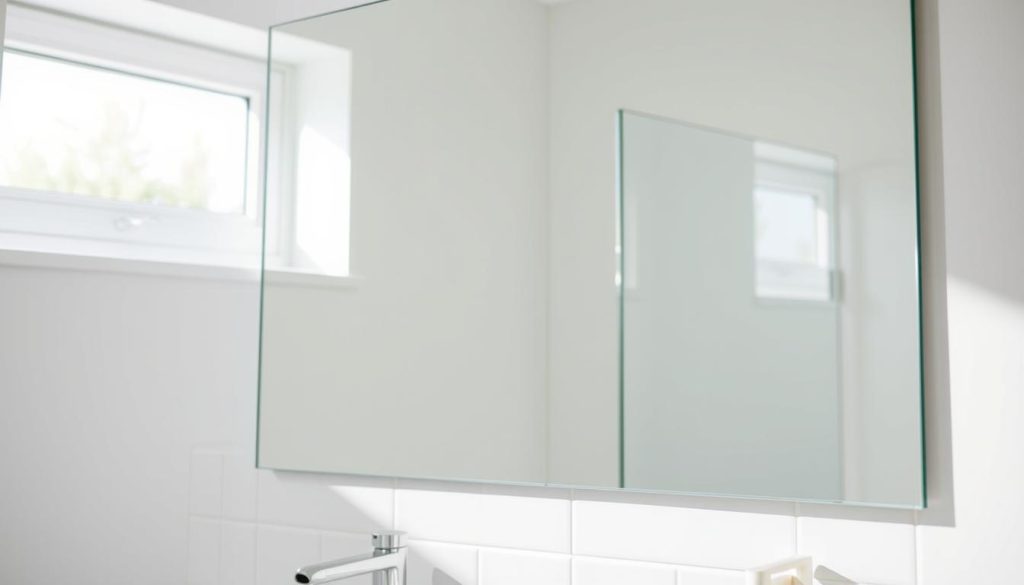
Limescale and steam in British bathrooms often leave a dull film on glass and reflective surfaces.
Hard water deposits mix with humidity and form deposits that blur a mirror’s image. Left unchecked, scale and daily splashes dull reflections and make bathrooms feel tired.
Common mistakes make the problem worse. Using linty paper towels or harsh tools causes smears, scratches and stubborn marks. Leaving chemical residue can create a cloudy film that resists later cleaning.
Quick weekly upkeep prevents build-up from toothpaste flecks and water spots. A run-through with distilled water and the right cloth removes residue without risking edges or backing.
- Protect edges and delicate backing by avoiding abrasive methods.
- Avoid strong chemicals that leave a film on glass and surfaces.
- Use suitable tools to cut time spent on stubborn dirt.
Small changes in technique give noticeably better results. ELFA Cleaning LTD offers practical guidance so households can get trade-level standards at home.
| Issue | Cause | Quick fix |
|---|---|---|
| Limescale | Hard water + humidity | Distilled water wipe, gentle solution |
| Smears | Linty towels or excess product | Microfibre cloth, light sprays |
| Cloudy film | Chemical residue | Avoid strong chemicals; rinse with distilled water |
Essential kit for a streak-free finish
Using trade-grade supplies scaled for domestic use transforms a tricky job into a five-minute task.
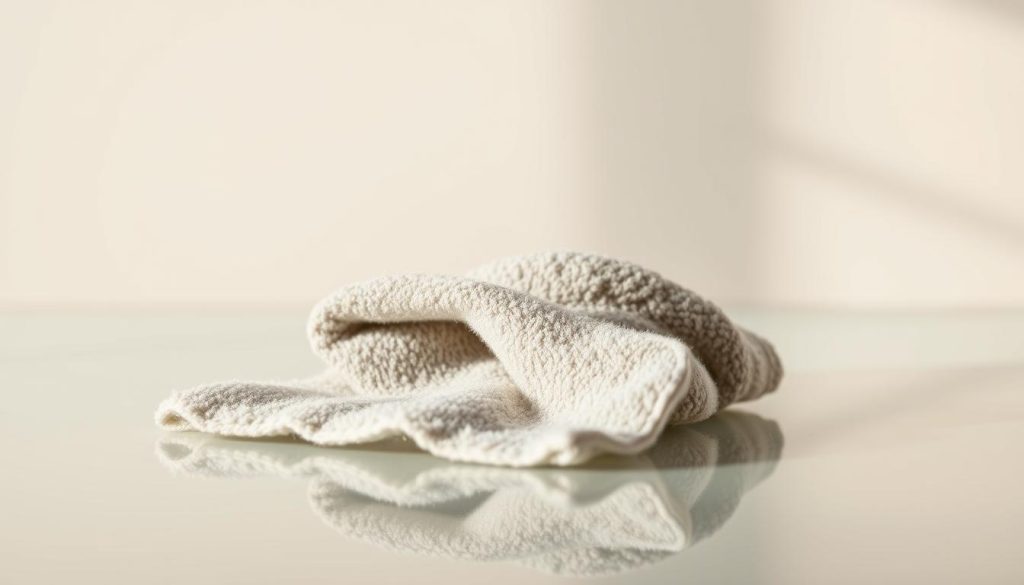
Microfibre cloths versus paper towels
Microfiber traps dust and grit so you avoid scratches. Paper towels often shed fibres and leave streaks.
To get the best result, use microfiber cloth for application and a second, dry cloth for buffing. This two-cloth method reduces rework and improves hygiene.
Choosing the right glass cleaner and spray bottle
Pick a quality trigger spray bottle to mist evenly and prevent runs. A good bottle gives control and saves product.
Trade brands such as Selden, Mr Muscle, Bohle and HG supply reliable cleaner options. Choose an aerosol for fast evaporation, or a trigger format for larger panes of glass.
When to use distilled water and optional tools
In hard-water areas, distilled water removes mineral residues and cuts streaking. Keep cotton buds and rubbing alcohol for spot treatment.
- Squeegee for large panels
- Lint-free polish cloth for the final buff
- Cotton buds for precise spot work
Store microfibre separately and launder without fabric softener to keep it effective. These simple tips ensure a pro-level finish every time.
The best way to clean a mirror step by step
A simple, repeatable technique turns a tricky job into a five-minute finish you can trust.
Prep: dusting edges and removing loose dirt
Start by removing loose dirt and dust along the frame and edges so debris doesn’t drag across the surface.
Use a dry microfibre cloth or a soft toothbrush to reach corners. This prevents grit from causing streaks or scratches.
Spray wisely: light misting to avoid drips
Lightly mist the glass rather than soaking it to prevent drips that carry residue. One short pump is usually enough for a standard bathroom mirror.
Wipe pattern: S-strokes vs vertical/horizontal passes
Use consistent S-strokes or straight overlapping passes to lift grime evenly without re-depositing it. Keep the cloth flat and apply light pressure.
Switch to a dry side of the cloth for the final passes to achieve a crisp finish and reduce rework.
Buffing for a crystal-clear, streak-free finish
Buff with a clean, dry microfibre to chase away faint streaks and enhance clarity.
Step to the side and change the lighting angle to catch any haze or missed marks. Repeat a small spray-and-buff on persistent streaks rather than rubbing harder.
ELFA Cleaning LTD provides a simple routine anyone can master for consistent results every time.
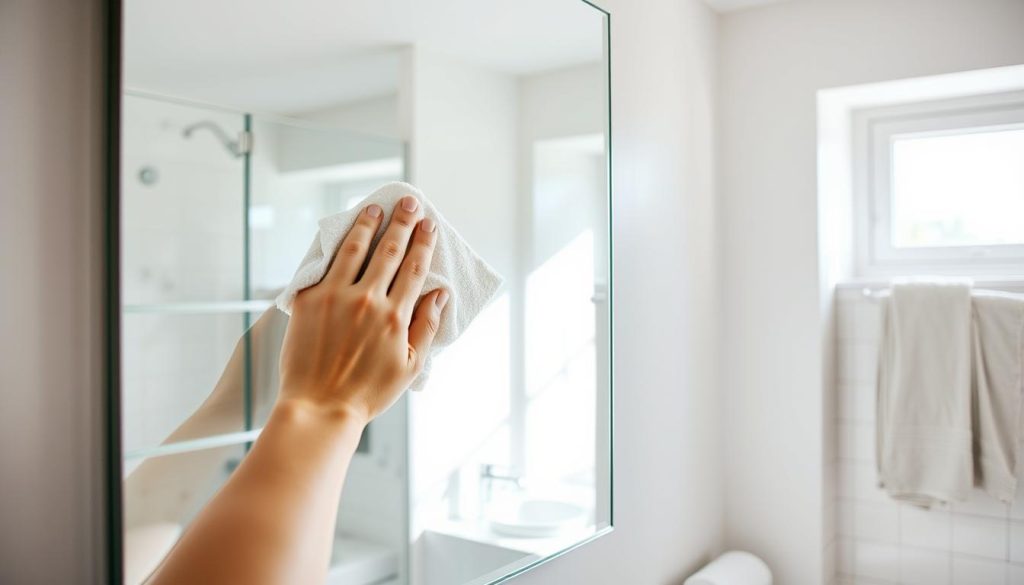
clean mirrors
This section defines what ELFA Cleaning LTD means when we say a tidy reflective surface. It covers bathroom vanity mirrors, hallway mirrors and decorative mirror panels.
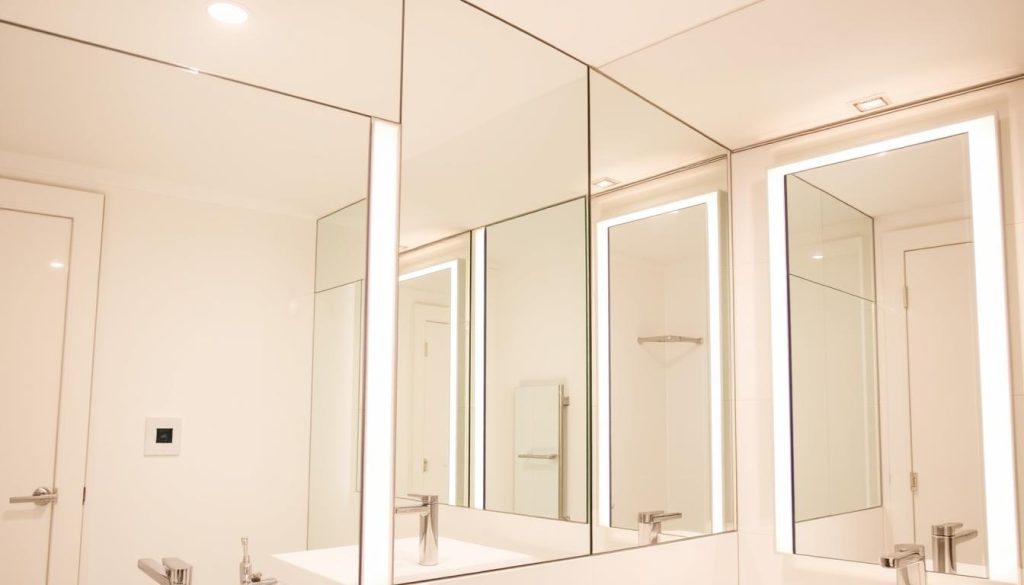
One method fits all. Use the same gentle routine for adjacent glass without risking scratches. Microfibre cloths, light misting and the right glass solution stop lint and residue from spreading across the surface.
Quick, practical tips:
- Light misting prevents runs and reduces drying marks.
- Buff with a clean, dry cloth for a crisp finish.
- Keep a compact kit in the bathroom for fast weekday touch-ups.
- Choose purpose-made glass products over multipurpose sprays for better results.
Small, regular upkeep beats occasional heavy cleans. Mindful wiping patterns stop grit being re-deposited and save time.
| Item | Best tool | Why it helps |
|---|---|---|
| Vanity mirror | Microfibre cloth | Traps dust, avoids scratches |
| Hall mirror | Light mist + dry buff | Quick finish, no streaks |
| Decorative panel | Suitable glass cleaner | Prevents residue build-up |
ELFA Cleaning LTD uses these simple steps across mirror styles and sizes to deliver reliable results every time.
How to clean a bathroom mirror without streaks
A well-lit angle and the right stance make it far easier to spot faint streaks on a bathroom mirror.
Pre-treat spots such as toothpaste specks or hairspray. Dab a tiny amount of rubbing alcohol on a cloth corner or a cotton bud and lift the dirt gently. This prevents dragging residue during the main pass.
Spray a light, even mist over the glass and wipe in broad S-patterns from top to bottom. Keep the cloth flat and use controlled passes so the product lifts rather than smears.
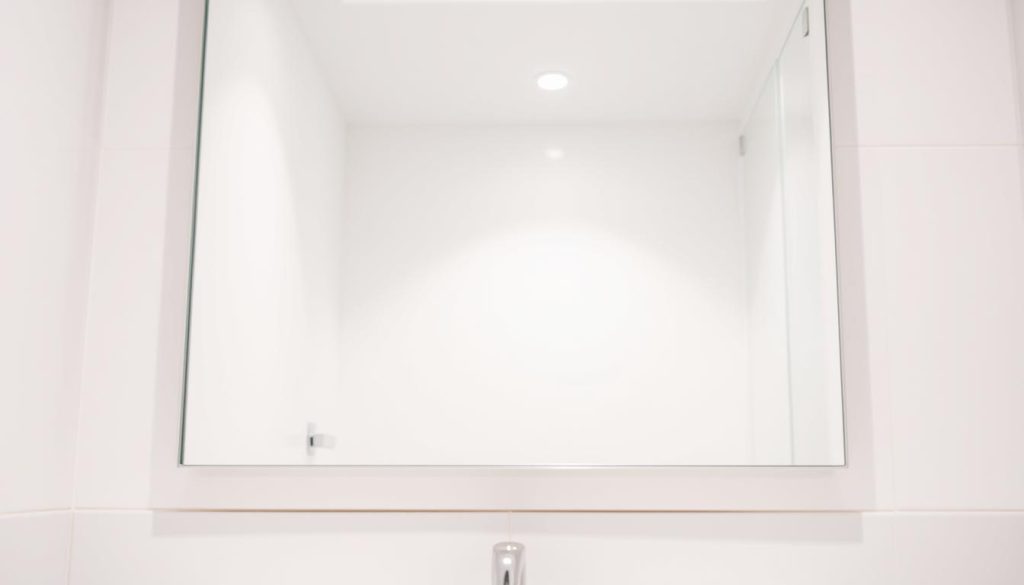
Positioning and lighting to spot missed areas
Stand to one side and switch off bright task lights briefly. Viewing from an angle reveals faint film and streaks that vanish when seen head-on. This small change helps the mirror show a proper shine.
“Turn off overhead lights and step sideways to catch faint marks — a simple trick professionals use.”
- Pre-treat stubborn toothpaste specks and hairspray dots with a tiny amount of rubbing alcohol on a cotton bud.
- Follow with a light spray and controlled passes to lift residue without chasing streaks.
- Use a fresh, dry section of your cloth for the final buff so the bathroom mirror pops with shine.
- Turn off bright task lights and view from a side angle to see faint smears you might miss head-on.
- In steamy bathrooms, wait until condensation clears before cleaning to avoid diluted product marks.
- For frequent splashes, keep a small kit easy to reach so daily upkeep takes under a minute.
- If the mirror still looks hazy, re-wipe with a dry microfibre to polish the last traces away.
- Finish by wiping the bottom edge where product drips often collect.
| Problem | Quick action | Why it works |
|---|---|---|
| Toothpaste spots | Rubbing alcohol on a bud | Removes residue without smearing |
| Steam-diluted solution | Wait for condensation to clear | Prevents streaky, uneven drying |
| Missed faint streaks | View from a side angle | Changes reflection to reveal haze |
Removing stubborn stains and marks on mirror glass
Stubborn spots demand a targeted approach so the rest of the surface stays unaffected.
Identify the mark before you act. Cosmetic residue, hairspray lacquer or sticky splatter each need a different touch. Dust the area first so grit does not get dragged across the glass.
Spot-treat with rubbing alcohol applied sparingly on a cotton bud. Work the small area gently until the mark lifts, then move on. This method limits moisture near the backing and frames.
- Apply alcohol only to the affected point to protect adjacent surfaces.
- For multiple tiny spots, work in small sections rather than soaking the whole panel.
- Avoid abrasive pads or harsh scrapers that scratch sensitive surfaces.
- After spot removal, use your regular cleaners and soft passes to even the finish.
- Finish with a dry microfibre buff for uniform clarity across the panel.
- If residues persist, call ELFA Cleaning LTD for specialist care, especially on antique or delicate items.

| Issue | Spot method | Risk if done wrong |
|---|---|---|
| Makeup smears | Rubbing alcohol on a bud | Backing damage if over-wet |
| Hairspray lacquer | Small, repeated dab technique | Cloudy film from excess product |
| Sticky splatter | Work in sections; finish with regular cleaner | Scratches from abrasives |
DIY and eco-friendly cleaning solutions that work
ELFA Cleaning LTD shows greener options that still deliver professional results. These mixes use household staples so you avoid harsh chemicals while keeping glass surfaces clear.
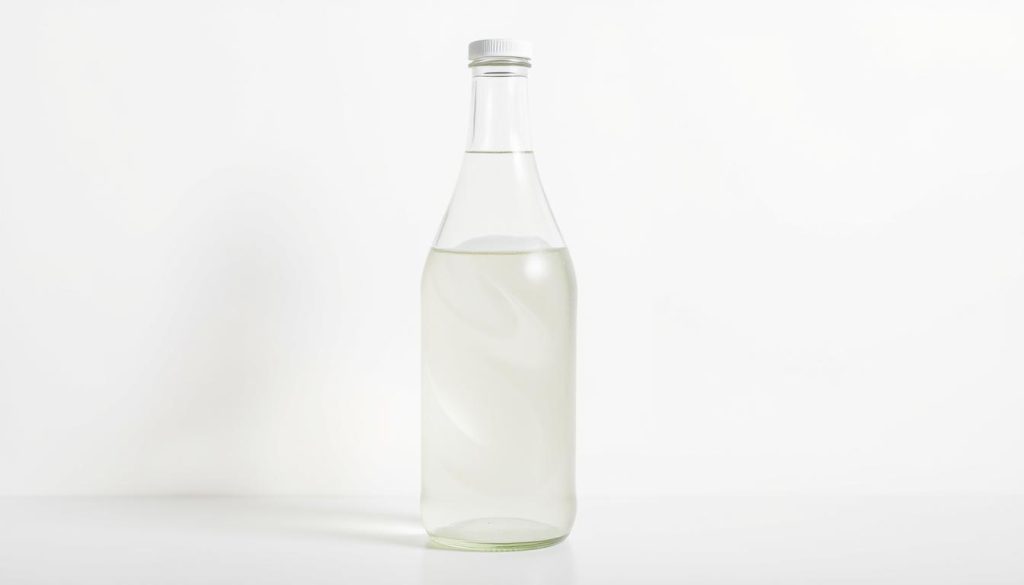
White vinegar and distilled water solution
Recipe: equal parts distilled water and white vinegar plus 1 tbsp corn starch. Shake before use, spray lightly and wipe in S strokes, then buff dry.
Lemon juice as a natural degreaser
Lemon diluted with water breaks down fingerprints and cosmetic film gently. It is ideal for greasy spots and leaves a fresh scent without lingering residues.
Mild washing-up liquid mix for everyday maintenance
A few drops of washing-up liquid in warm water tackle daily smears. Use sparingly, rinse with a mist of distilled water and dry with a microfibre cloth to avoid streaks.
- Shake DIY mixes so ingredients disperse evenly.
- Avoid over-wetting; always buff dry to prevent water marks.
- Use a commercial glass cleaner for heavy build-up or when you need speed.
- Patch-test older or decorative pieces to protect delicate finishes.
Preventing a foggy bathroom mirror
A short DIY spray and the right timing cut condensation and help mirrors stay usable after bathing. ELFA Cleaning LTD recommends a simple, low-cost approach for an immediate improvement and a longer-term option for busy households.
Anti-fog spray recipe
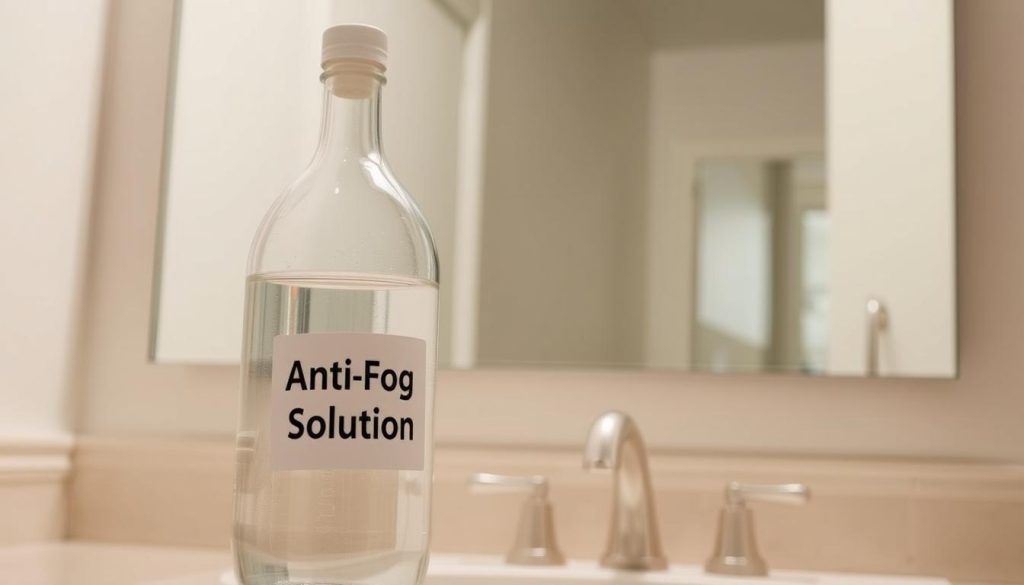
Mix one cup water, one cup white vinegar and a teaspoon of dish soap in a spray bottle. Lightly mist the surface and wipe with a clean microfibre cloth. A thin, even layer delays fogging without leaving a film.
Practical tips and upgrades
Less product is more. Heavy application can cause streaks, so always buff dry after spraying.
- Improve air flow by opening a window or using an extractor fan to cut condensation.
- Reapply the DIY solution every few weeks or after heavy use for continued effect.
- For a permanent fix, consider demister mirrors with integrated heating; they keep the glass clear without sprays.
- Apply the mix only when the surface is completely dry so the solution adheres correctly.
“A light spray and a good cloth beat repeated wiping — and save time in the long run.”
How often to clean mirrors and glass surfaces
A simple, realistic schedule keeps glass looking good without turning upkeep into a chore.
Busy bathrooms and family washrooms benefit from weekly attention. If splashes and toothpaste marks are daily, aim for short touch-ups several times a week to stop build-up.
Low-use areas such as guest bathrooms and seldom-used hallways can be checked bi-weekly or monthly. Regular spot cleaning preserves clarity and avoids tough scrubs later.
Indoor glass like windows and tabletops often need weekly dusting or a light wipe. Outdoor window care is seasonal or bi-annual, depending on weather and exposure.
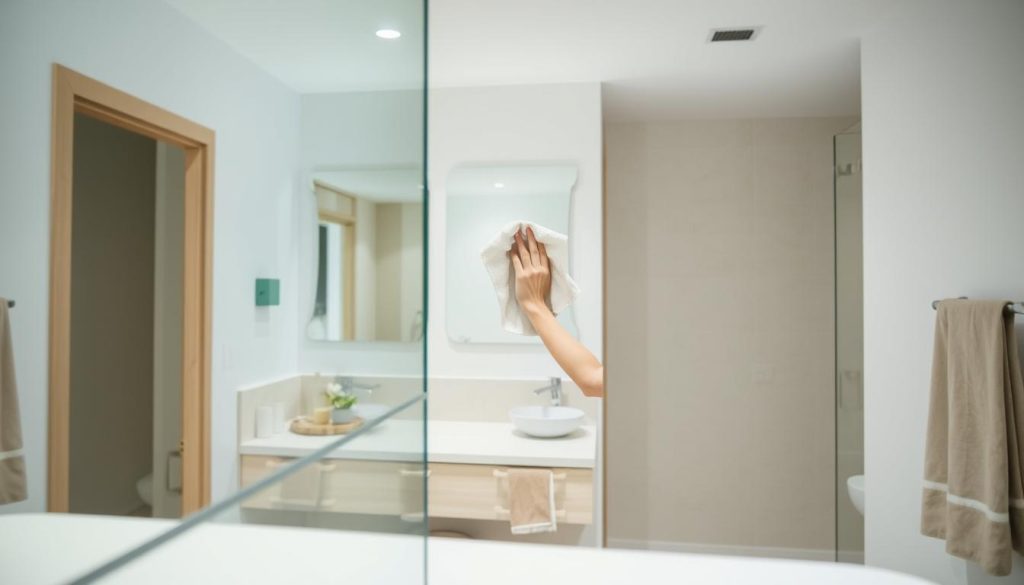
- Weekly for busy bathrooms; more frequent touch-ups if splashes are daily.
- Bi-weekly or monthly for low-use spaces to keep prints and dust manageable.
- Tie mirror upkeep to a wider routine that includes interior windows and other glass surfaces.
- Quick spot cleans stop residue building up and reduce effort later.
- Homes with pets or children may need shorter intervals; set reminders to help.
“A little maintenance often uses less product and saves time in the long run.”
ELFA Cleaning LTD encourages routines that fit your household. Contact us for maintenance plans if you prefer a professional schedule for large homes or busy lives.
Common mistakes to avoid when cleaning mirrors
A few common mistakes double the time it takes to get a streak-free finish. ELFA Cleaning LTD helps you avoid these pitfalls so you save time and get better results.
Over-spraying is a frequent error. Heavy spraying encourages runs that dry into visible streaks and residue. If you let a solution sit, it can leave a faint haze rather than lift the dirt.
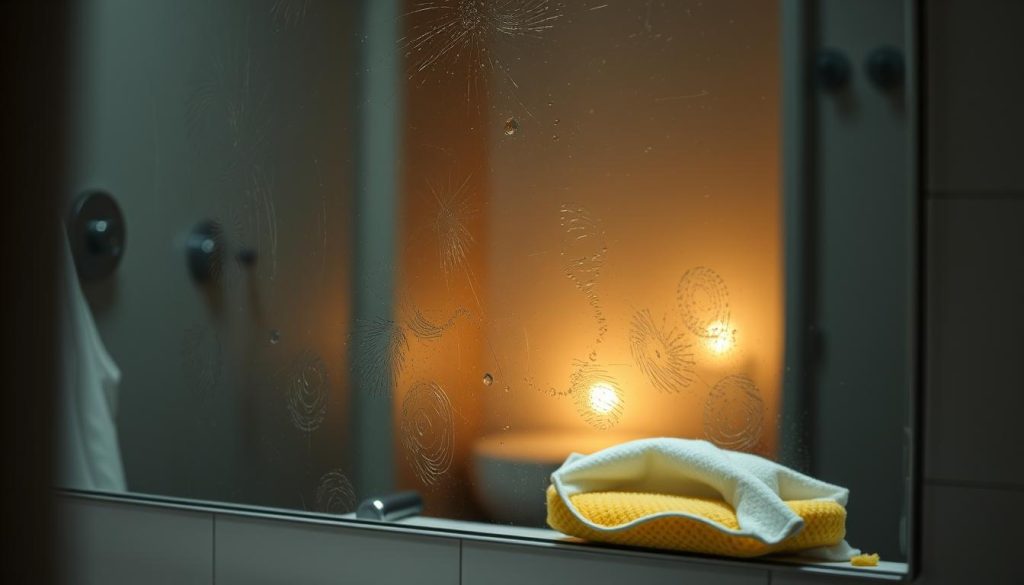
Don’t use abrasive tools or harsh chemicals
Abrasive sponges, scourers or metal pads can scratch glass and damage edges. Avoid harsh chemicals that strip coatings or attack backing.
Avoid the lint problem with paper towels
Paper towels often shed fibres and create tiny streaks. Use a microfibre cloth instead for safer, faster passes.
Practical habits that save time
- Decant cleaners into a fine-mist bottle for better control and less waste.
- Use multiple light passes with a clean, dry cloth rather than one saturated wipe.
- Watch out for fragranced or soapy cleaners; additives can leave a film on reflective surfaces.
- Finish with a quick buff to remove faint lines and restore clarity.
“Less product and gentler tools get a better finish and cut rework time.”
ELFA Cleaning LTD recommends small, steady changes to technique so upkeep stays quick and effective.
What not to use on mirrors and glass
Some everyday products cause more harm than help when used on reflective glass. ELFA Cleaning LTD prioritises safe care for delicate finishes and recommends avoiding certain items entirely.
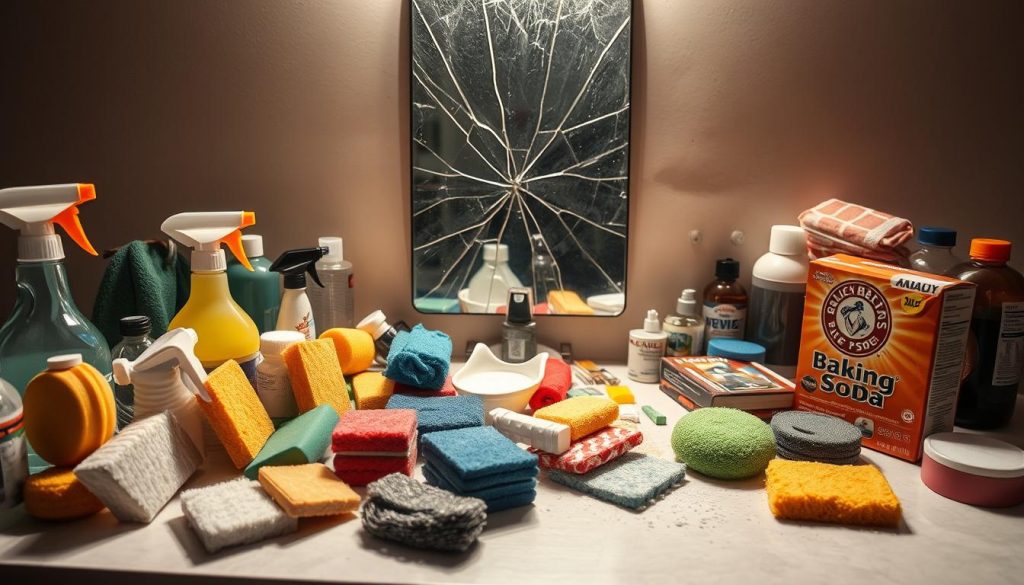
Ammonia-based products and fragranced cleaners
Avoid undiluted ammonia or high-strength ammonia sprays, particularly in direct sunlight. They evaporate too quickly and can leave streaks or haze on the surface.
Fragranced or dyed cleaners often contain additives that leave a thin film. That film shows up as dull patches under angled light and needs repeated work to remove.
Harsh abrasives, scrub brushes and galvanised scourers
Hard scrubbing tools increase the risk of micro-scratches. These tiny marks scatter light and make a mirror look cloudy over time.
Galvanised scourers and metal pads are especially unsafe. They can damage coatings, chip edges and shorten the lifespan of the mirror.
Problematic products and why:
- Ammonia-based sprays — cause streaking and can attack coatings.
- Fragranced/dyed cleaners — leave visible residues on glass.
- Abrasive pads and metal scourers — create micro-scratches and damage frames.
Safe alternatives: use a gentle, purpose-made glass formula and soft microfibre. Test any new product in an inconspicuous spot first.
“Less aggressive products and the right tools preserve reflective quality and reduce repeat work.”
Read labels, store chemicals away from humid bathrooms and choose proven glass-specific cleaners. These small steps protect the mirror’s reflective quality for longer.
From mirrors to windows: applying the same technique to glass surfaces
Small adjustments make mirror methods ideal for windows, tabletops and shower screens without extra fuss.
Prepare the area and remove grit so you do not drag particles across the glass. Hold the bottle 6–8 inches away when you spray to avoid over-wetting. Wipe in straight, overlapping strokes from top to bottom for a consistent finish.

Windows, glass tabletops and shower screens
Translate the routine: use the same microfibre technique for interior windows, glass tabletops and shower screens. For shower screens, follow with a squeegee after use to cut soap film and water marks.
Polishing tips for a uniform shine across glass
After the wet pass, polish with a dedicated dry microfibre cloth in small circular motions to lift the last haze and improve shine. Inspect from different angles and light to spot faint streaks. Wipe frames and seals dry to avoid mineral marks and protect coatings on specialty glass mirrors and panels.
- Spray 6–8 inches away for control and even coverage.
- Keep strokes consistent top-to-bottom for an even finish.
- Use a dedicated polishing cloth to avoid lint and boost shine.
- Call ELFA Cleaning LTD for large window runs or high-access work.
| Surface | Best action | Extra tip |
|---|---|---|
| Interior window | Top-to-bottom strokes | Inspect from an angle to catch haze |
| Glass tabletop | Light spray; wipe flat | Polish in circles to enhance finish |
| Shower screen | Squeegee after shower | Wipe seals dry to stop mineral marks |
Professional tips and services from ELFA Cleaning LTD
ELFA Cleaning LTD brings trade skills and tailored services across the UK to deliver reliable results for your glass surfaces.
Practical way: dust first, mist lightly, then wipe in S or straight passes and finish with a dry microfibre buff for a crisp sheen.
Use a purpose-made glass cleaner for routine work and switch to a DIY mix or rubbing alcohol on a cotton bud for precise spot treatment. Technicians use minimal product and steady passes to avoid backing damage.
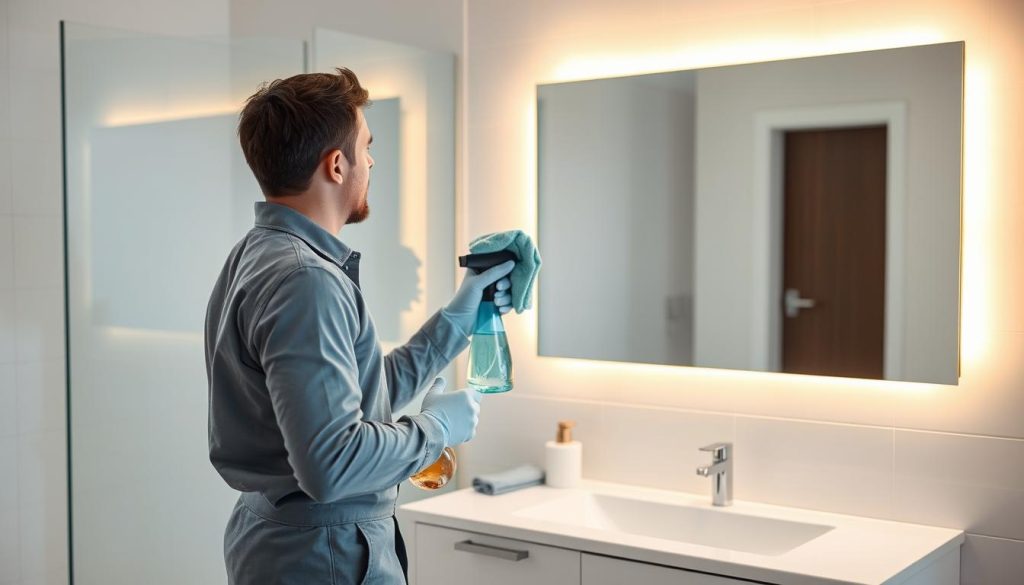
“We aim for a flawless finish with less product and consistent technique — that’s our guarantee.”
- Trade tips that speed jobs and keep consistency across mirrors glass in all rooms.
- When to choose commercial cleaners over DIY solutions and vice versa.
- Periodic maintenance plans for homes and businesses to hold a high standard.
- Anti-fog advice and upgrades such as demister mirrors for persistent condensation.
- Safety practices around edges and frames to protect the surface and finish.
| Service | Best use | Benefit |
|---|---|---|
| One-off deep clean | Large wall panels | Restores clarity quickly |
| Scheduled maintenance | Busy bathrooms | Consistent results with minimal fuss |
| Specialist care | Heritage finishes | Protects delicate backing and value |
Contact ELFA for tricky areas, large jobs or to arrange flexible booking and guaranteed results.
Conclusion
Follow this simple checklist for the best way clean reflective glass at home.
Quick routine: dust first, light spray, controlled wipes and a dry buff for a streak-free finish. Use distilled water in hard-water areas and inspect from different angles to spot faint haze.
For spot treatment, dab rubbing alcohol sparingly. DIY vinegar mixes work well when applied lightly and buffed dry. For a reliable result, use microfiber and remember to use microfiber for the final polish.
If you need help with tall mirror panels, large window runs or time-saving services, contact ELFA Cleaning LTD. Thank you for choosing careful upkeep that keeps your mirrors and rooms looking their best.
FAQ
What kit do I need for a streak-free finish?
Use a good-quality microfibre cloth, a fine mist spray bottle, distilled water and a gentle glass cleaner. Optional items include a small squeegee, a lint-free polishing cloth and cotton buds for edges.
Why use distilled water instead of tap water?
Distilled water prevents mineral spots and streaks caused by hard water. Mix it with a mild cleaner or vinegar for clearer results on glass surfaces.
Can I use white vinegar on mirrors?
Yes. A diluted mix of white vinegar and distilled water makes an effective eco-friendly solution. Test on a small area first and avoid frames or surfaces that might be damaged by acid.
How should I spray the solution to avoid drips?
Mist lightly from about 20–30 cm away. Aim for an even, fine spray rather than large droplets, which can run and leave marks along the edges.
Which wiping pattern works best?
Start with S-shaped strokes to cover the surface, then finish with vertical or horizontal passes to remove streaks. Use a fresh section of the microfibre for final buffing.
How do I remove stubborn marks like toothpaste or hairspray?
Apply a small amount of rubbing alcohol to a cotton bud or corner of a microfibre cloth and gently spot-treat. Rinse the area with the vinegar mix afterwards and buff dry.
How often should I clean bathroom mirrors?
High-traffic bathrooms benefit from weekly attention; low-use spaces can be cleaned every 2–4 weeks. Wipe away fingerprints or splashes as they occur to keep the surface clear.
How can I prevent a mirror from fogging after a hot shower?
Rub a tiny amount of anti-fog spray or a diluted vinegar and dish soap mix onto the surface, then buff gently. For a long-term fix, consider installing a demister pad behind the mirror.
Are paper towels OK to use?
Paper towels can leave lint and streaks. Microfibre cloths outperform them for a lint-free, polished finish and are gentler on the glass.
What should I avoid using on mirrors?
Steer clear of ammonia-heavy cleaners, abrasive pads, scourers and fragranced multi-surface products. These can damage the silver backing and scratch the glass.
Can I use the same method on windows and other glass?
Yes. The same gentle solutions and microfibre technique work well on windows, tabletops and shower screens. Adapt drying tools — a squeegee helps on large panes.
When is it better to hire a professional cleaning service?
Call in professionals like ELFA Cleaning LTD for large properties, hard-to-reach glazing, delicate antique mirrors or when you need a flawless, streak-free result without the time and effort.