ELFA Cleaning LTD offers a practical, friendly guide to maintaining good-looking door surfaces across your home. This short introduction sets out a top-to-bottom routine that starts with dust removal to stop abrasive dirt from harming any finish.
Our approach blends professional methods with safe household products. We explain how to choose the right way for timber, gloss or glazed panels and how simple habits can save years of wear.
Handles and door handles are a hygiene focal point. ELFA recommends a fortnightly wipe for high-touch areas and a careful, full dry to avoid streaks. For glass panels, distilled water with vinegar works well, followed by a quick buff.
Read on for clear toolkit guidance, tailored methods for internal doors and pro tips to keep every part looking its best between deeper sessions.
Key Takeaways
- Start top to bottom to remove dust then loose dirt safely.
- Use tailored methods for different finishes to protect the finish.
- Wipe handles regularly — they are a small change with big impact.
- Test solutions on a small area first and dry thoroughly.
- Simple products like vinegar and a microfiber cloth give professional results.
Why a spotless door matters in your UK home
A spotless entrance sets the tone for any UK home, creating a clear sense of care. Visible surfaces shape first impressions and signal how a property is looked after.
First impressions and hygiene at high‑touch points
High‑touch areas attract fingerprints and grime quickly. Regular attention to panels, knobs and handles reduces germs and keeps guests at ease.
“Small, regular checks save time and prevent deep work later.”
White doors: keeping that crisp, contemporary look
White surfaces make rooms feel larger but show marks and stains fast. Tailor maintenance to usage: bathroom and kitchen entryways collect more dust, dirt and grime than quiet bedrooms.
- Clean handles at least every fortnight; increase frequency in busy homes.
- Patch test any product on paint before full use; acid-based mixes can harm finishes.
- Make a quick visual check part of daily routines to spot new marks early.
| Area | Frequency | Tip |
|---|---|---|
| Hallway panels | Weekly | Light dust then mild wash |
| Kitchen entry | 2–3 times weekly | Remove grease and grime promptly |
| Bedroom | Biweekly | Spot clean marks only |
Tools and gentle solutions you’ll need
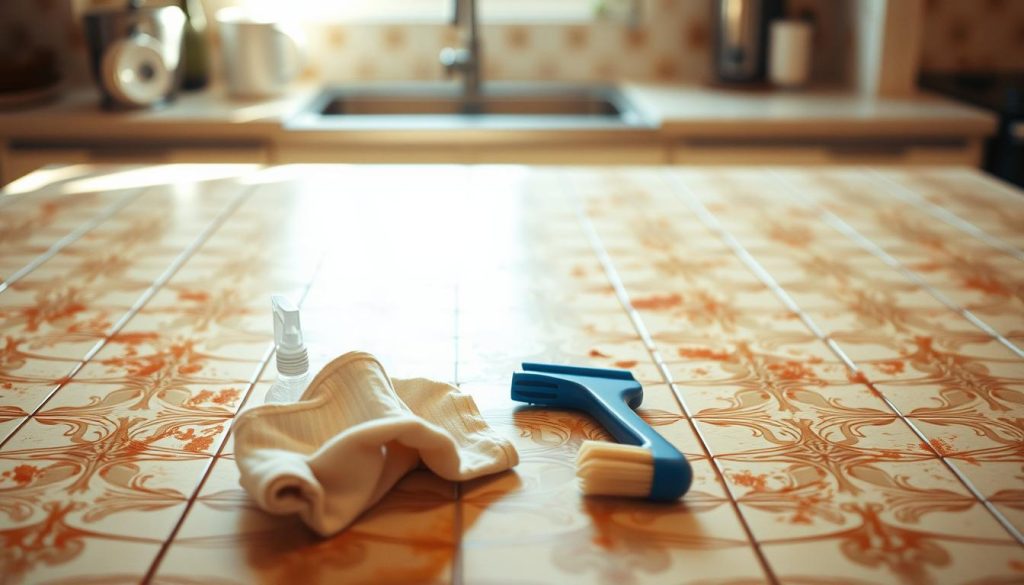
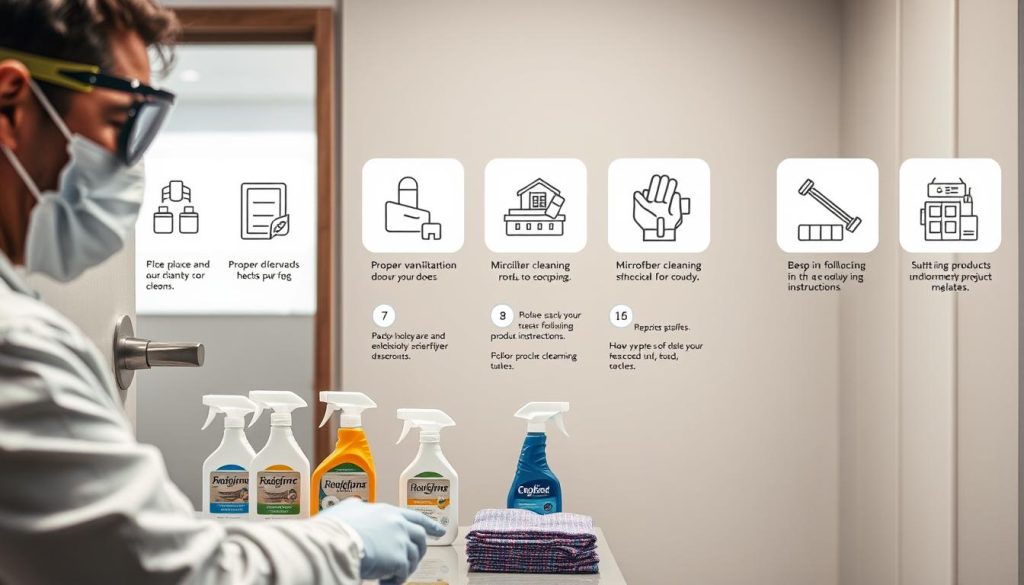
ELFA Cleaning LTD recommends a light‑touch kit that keeps finishes safe while shifting everyday grime. Gather soft tools and a mild mix before you start; that approach makes routine upkeep quick and effective.
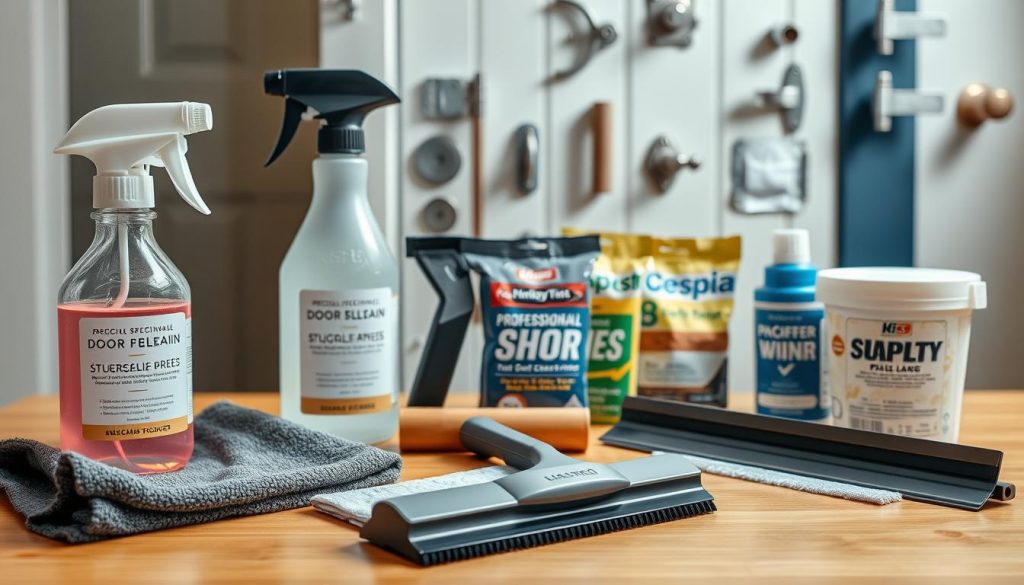
- Soft microfibre cloth and a spare cloth for drying.
- Soft sponges, a soft‑bristled brush and a bucket.
- Chamois for a final buff; newspaper or a squeegee for glass panes.
Simple solution: warm water with a drop of mild dish soap lifts soil without harsh cleaners. Use a soft‑bristled brush on textured profiles or shallow grooves to free trapped dirt.
White vinegar is a targeted option for glass or stubborn smears. Dilute and patch test first on paint or varnish. For panes, use distilled water to avoid mineral spots, pull with paper or a squeegee, then buff with a chamois.
Most of this kit is inexpensive, reusable and easy to store. A light polish or wax can add protection to gloss finishes and make future maintenance a smaller part of your routine.
Safety first: patch testing and protecting finishes
ELFA Cleaning LTD advises testing any product before tackling an entire panel. Always trial a diluted solution on a discreet hinge‑side edge or low corner first. Watch for softening, colour lift or dulling of the finish.
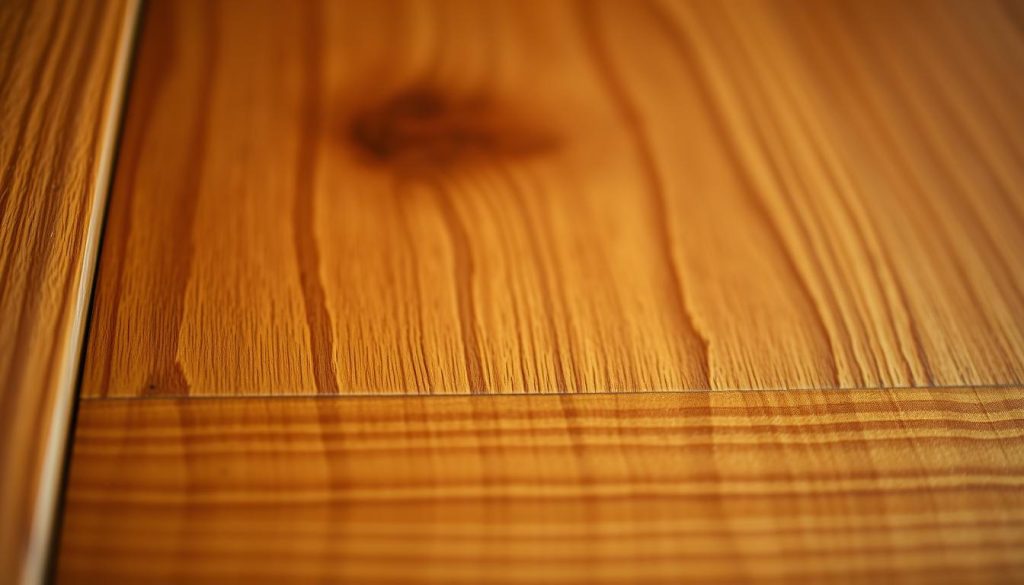
Where to test on painted, primed and varnished surfaces
Pick an inconspicuous area and use a soft cloth with light pressure. Painted and primed surfaces vary; what works on one coat can haze another. A small test saves costly rework.
When vinegar may be too acidic for paintwork
Vinegar and white vinegar must be diluted for many paints. Dab, don’t scrub. If you see any change, rinse and stop.
- Select a hidden spot on the hinge side or lower edge to trial a diluted solution.
- Use gentle motions with a soft cloth to avoid burnishing a glossy patch into satin or matt.
- Avoid strong detergents and abrasive pads, especially on moulded profiles where paint is thin.
- Allow the test area to dry fully and take a photo to compare sheen before proceeding.
How to clean and wipe doors, the door frames and the handle of the doors
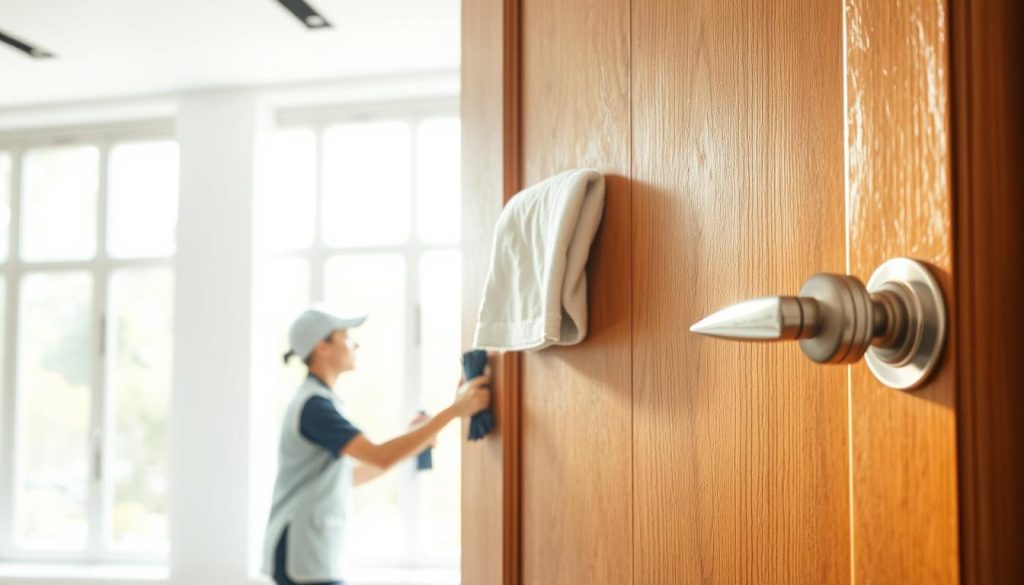
ELFA Cleaning LTD lays out a friendly, followable sequence that protects finishes while removing grit and daily grime. Start with a dry pass so washing won’t grind dirt into paint or varnish.
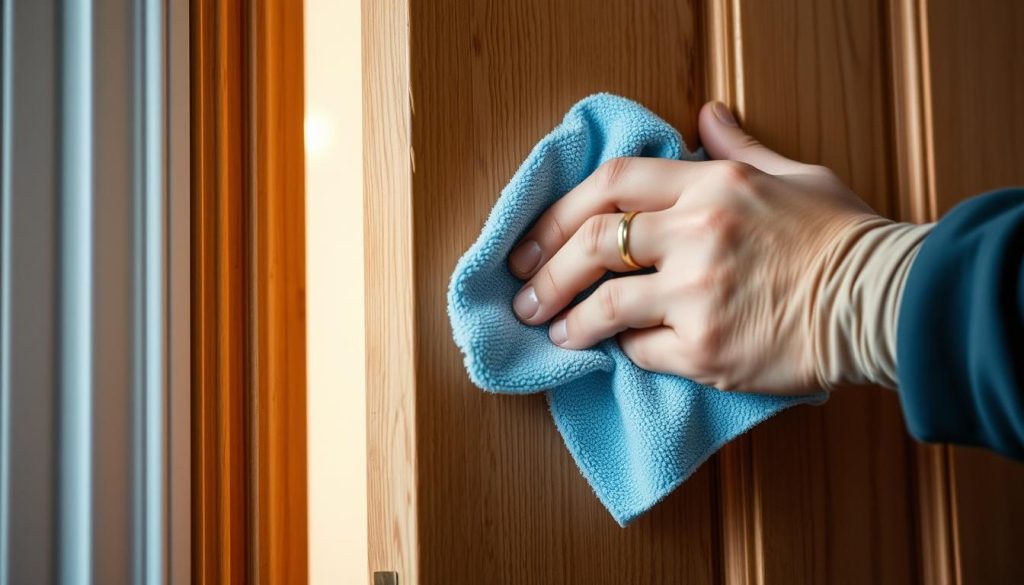
Step-by-step: dust, wash, rinse, dry to prevent streaks
Step 1: Dust from top to bottom to lift loose soil and dust.
Step 2: Mix warm water with a drop of dish soap. Work across the entire door in overlapping motions using a barely damp cloth or soft sponge.
Step 3: Rinse with clean water to remove any soap film, then dry door immediately with a soft cloth or heavy‑duty paper towel to avoid streaks.
Paying attention to edges, panels and hardware
Focus on panel recesses, hinge sides and edges where dirt collects. Place newspaper or a towel beneath to catch drips and protect flooring.
- Include handles in the same sequence to remove oils and fingerprints.
- For stubborn fingerprints, use the diluted washing‑up liquid mix, wipe off and buff lightly.
- Finish with a final pass to check the surface for missed spots and ensure a uniform appearance.
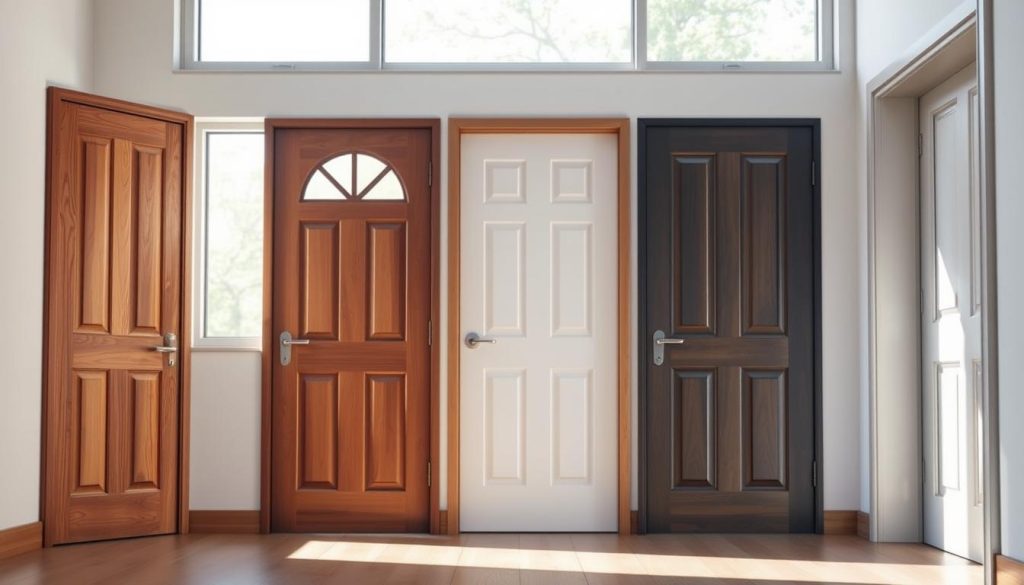
Material-specific methods: wooden, painted and white gloss doors
ELFA Cleaning LTD provides tailored care so each surface keeps its look and lasts for years. Choose a gentle method that matches the material before you start.
Wooden care: gentle soap and careful drying
Begin by dusting. For wooden doors, use warm water with a drop of dish soap applied sparingly with a soft sponge.
Rinse lightly and dry with a microfibre cloth. Avoid saturating joints to prevent swelling and water marks.
Consider a light wood polish or re‑staining as part of longer‑term maintenance to protect the finish.
Painted surfaces: mild mixes and fingerprint removal
Patch test any solution on a hidden edge. Use the same mild soap mix to lift grime.
For fingerprints, a diluted washing‑up liquid applied gently will help. Avoid strong detergents that can soften paint.
Wipe along the grain or the longest panel dimension for a consistent sheen.
White gloss: clean, then add polish for glow
After washing and drying, apply a thin coat of suitable polish or wax to deepen shine and protect the surface.
Internal doors respond best to light, frequent attention rather than heavy scrubs. Keep tools simple: a soft cloth, clean water and a mild dish blend will handle most day‑to‑day cleaning.
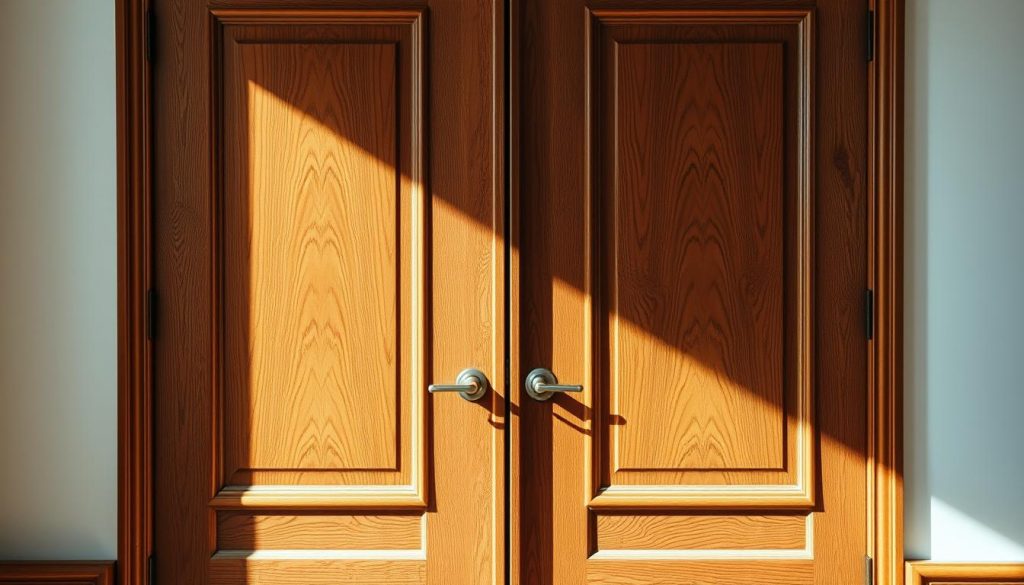
“Match method to material and you protect both appearance and joints for years.”
Glass and frosted panels: streak‑free techniques
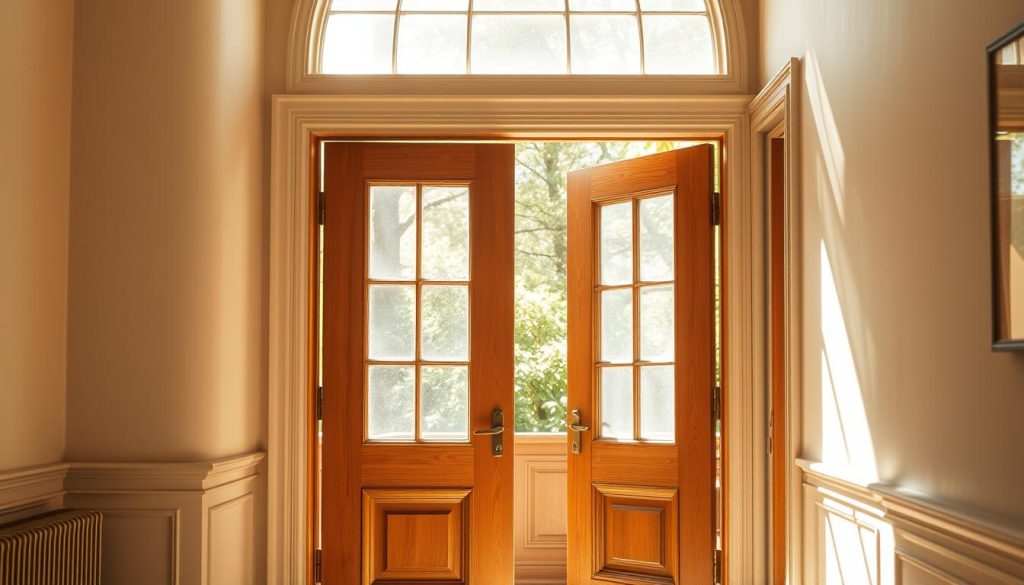
ELFA Cleaning LTD shares a favourite routine for glazed inserts that keeps surfaces bright with minimal effort. Clear glazing looks best when treated with low‑mineral water and gentle motion. Use careful, regular attention so marks and stains do not set.

Distilled water, vinegar dilution and a smooth pull
Mix a 1:1 water and vinegar solution and apply sparingly. Choose distilled water to prevent mineral spotting. Pull the liquid away using folded newspaper or a squeegee for an even finish.
Frosted surfaces and tough stains
For frosted inserts, a light soap wipe each day keeps texture fresh. For stubborn marks or metal stains, a cautious ammonia‑based cleaner can help. Always use a non‑abrasive pad and a lint‑free cloth to remove residues.
Detailing corners where panes meet frames
Work from top to bottom to avoid re‑soiling cleaned areas. Use a cotton bud to lift trapped grime at the meeting lines. Finish with a chamois or microfiber buff for a final polish.
- Treat fingerprints quickly so they don’t harden.
- Test any new solution on a small area first.
- Keep passes light; avoid excess water near joins.
“A gentle, methodical pass makes streaks a thing of the past.”
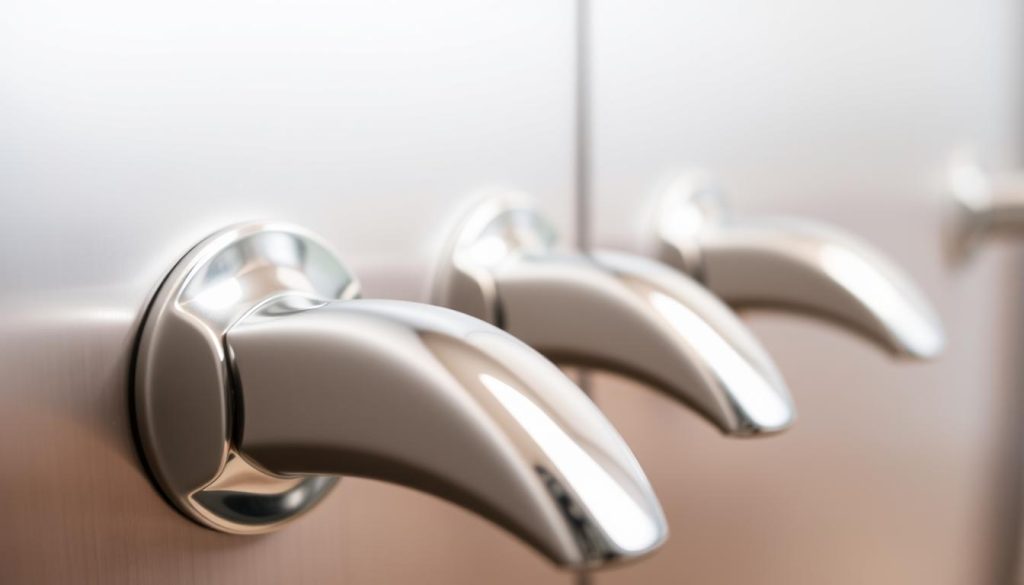
Handles and knobs: cleaning and sanitising the right way
ELFA Cleaning LTD emphasises that hardware hygiene is central to whole‑door care. A brief routine reduces germ transfer without using harsh products.
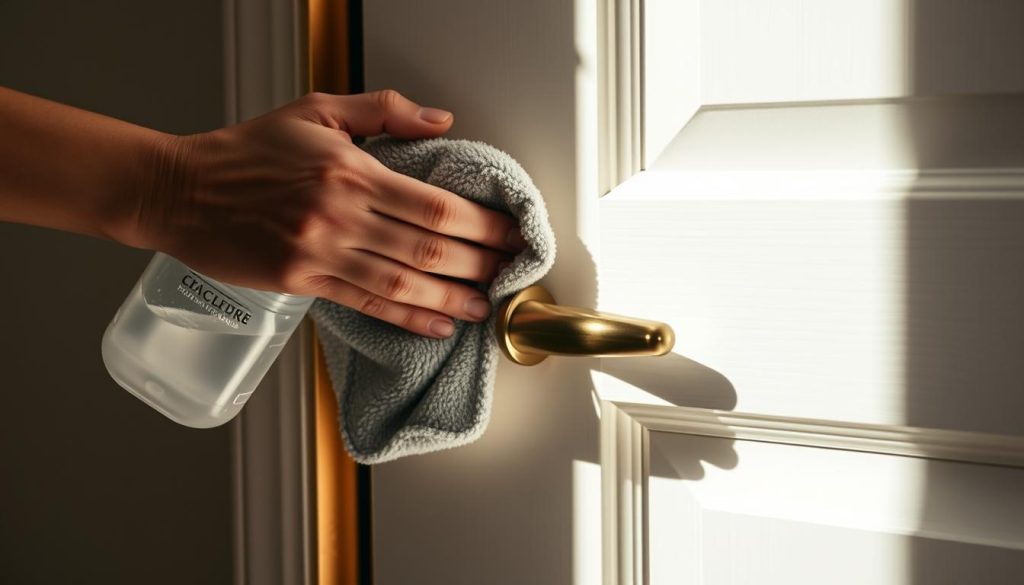
Start with a dry microfibre pass. Use a microfiber cloth to remove loose debris before applying any liquids. This saves time and prevents grit from scratching finishes.
Apply a small amount of mild all‑purpose cleaners to a cloth rather than directly onto metal or electronic parts. This controls moisture near latch mechanisms and keeps electronics safe.
For sanitising, mist a 1:1 water and vinegar solution lightly, allow it to dwell for five minutes, then wipe and dry. This gives a safe, effective disinfectant action without strong chemicals.
Recommended frequency for high‑touch hygiene
- Routine: clean handles at least every fortnight as standard maintenance.
- Increase frequency during illness seasons or in busy households.
- Include backplates, thumb‑turns and latch edges — these spots collect frequent touches and need attention.
- Finish by drying to a streak‑free sheen so hardware looks cared for and adjacent doors do not show water spots.
| Task | Method | Frequency |
|---|---|---|
| Loose debris removal | Dry microfiber cloth pass | Weekly/Before liquids |
| Light cleaning | Cleaner on cloth, gentle rub, rinse & dry | Fortnightly |
| Disinfection | 1:1 water:vinegar mist, 5 min dwell, wipe dry | During illness or high use |
| Detail spots | Cotton bud at backplate and latch edges | Fortnightly or as needed |
“Tend hardware often and you protect both hygiene and finish over time.”
Door frames, trim and skirting: the often‑missed areas
Those often‑overlooked borders around an opening collect dust and marks that age a room. ELFA Cleaning LTD encourages a whole‑assembly approach so frames, trim and skirting match freshly tended panels.
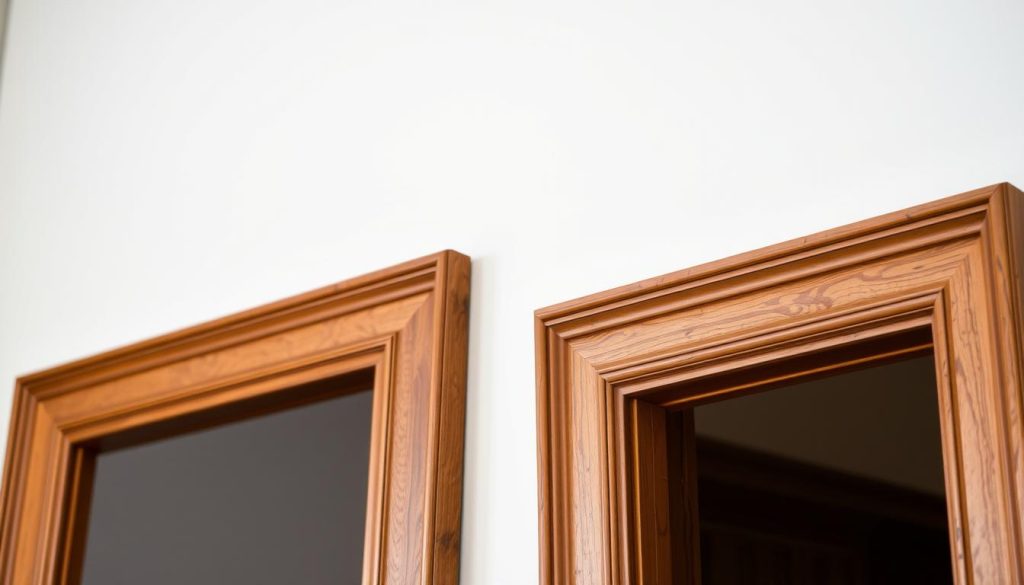
Dusting profiles and grooves before damp wiping
Begin at the top rail and architrave. Use a vacuum with a crevice tool or a soft brush to lift loose dust from profiles and grooves first.
This prevents dragging dirt across paint when you later use a damp cloth. Pay special attention to the latch side, hinge knuckles and cill lines where dirt builds up and marks nearby walls or doors.
Drying thoroughly to avoid moisture damage
Wash frames with warm water and a drop of mild soap, using a soft sponge and light strokes to preserve edges and caulk lines on internal doors with decorative profiles.
Always follow with a separate, dry cloth to remove water and prevent moisture from sitting in corners. Thorough drying reduces the risk of swelling, flaking paint or dull patches on timber and painted trim.
- Lift dust before any wet pass to protect finishes.
- Use a damp cloth with mild soapy water, then dry immediately.
- Include frame checks in routine cleaning so trim stays fresh with your doors.
“Small, regular frame checks save time and preserve finishes.”
Troubleshooting marks, scuffs and yellowing over time
Minor marks and age spots often respond to simple, targeted remedies before you consider a full repaint. ELFA Cleaning LTD offers clear fixes that may need only a local touch rather than work on an entire door.
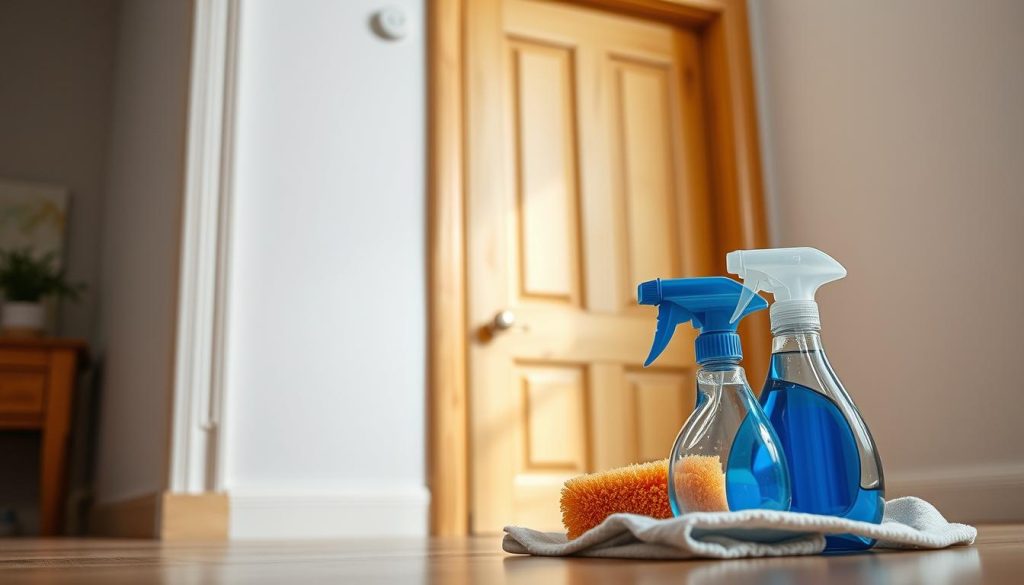
Stain removal with baking soda and mineral spirits
For light yellowing, mix ½ cup baking soda with ¼ cup water to form a paste. Apply for five minutes, then wipe with a damp cloth and dry.
For embedded grime on wooden doors, dampen a cloth with mineral spirits and work a small area. Ventilate the room and patch test first.
Scuffs, scratches and spot repairs
Buff minor scuffs with a soft cloth and a small amount of polish. If marks persist, sand the smallest feasible area, then spot repaint with matched paint.
Why yellowing happens and simple remedies
Yellowing can come from moisture, tobacco smoke, heat sources or lack of sunlight. Severe discolouration may need repainting; apply a thin coat, follow drying times, then polish for a uniform look.
| Issue | Quick fix | When to repaint |
|---|---|---|
| Light stains | Baking soda paste; rinse & dry | If repeat treatment fails |
| Embedded grime | Mineral spirits on cloth; ventilate | If finish is damaged |
| Deep yellowing | Spot sand, coat with matched paint | When overall look is uneven |
“Tackle fresh marks quickly; a mild approach often restores the finish without affecting nearby areas.”
Conclusion
A simple regular rhythm of attention prevents wear and makes upkeep quick. Follow this concise guide to use gentle methods, soft cloths and clean water so a door and its surround keep a fresh look for years.
Key tips: dust first, work from the top down, patch test new solutions and dry each area promptly. Treat internal doors, frames and handles as one part of a whole routine for a uniform finish.
Keep a small caddy with a cloth, mild mix and gloves for quick touch‑ups. If you prefer a pro result or periodic deep work, contact ELFA Cleaning LTD — we offer expert help to protect your finish and keep your home looking cared for for years.
FAQ
How often should I clean high‑touch areas like handles and frames?
Aim to refresh handles, knobs and nearby trim at least once a week in busy households. In flu season or if someone is unwell, sanitise daily. Regular attention prevents grime build‑up and keeps hygiene levels high at key contact points.
What gentle solutions are safe for most painted and wooden finishes?
Use warm water with a few drops of mild dish soap for routine care. For spot cleaning, a diluted white vinegar mix works on many surfaces but always test first on an inconspicuous patch to protect paint and varnish.
How do I remove fingerprints and smudges without damaging a gloss finish?
Lightly dampen a microfibre cloth with warm soapy water, wipe in long strokes then buff dry with a clean cloth. For extra shine on gloss, finish with a specific polish designed for lacquered surfaces.
Is vinegar safe on painted doors and when should I avoid it?
Vinegar is useful for spot stains but can be too acidic for some paints and sealants. Avoid on newly painted or unsealed wood and always patch test for a minute to check for any dulling or lifting of the finish.
What’s the best way to clean glass or frosted panels without streaks?
Use distilled water mixed with a small amount of white vinegar, apply with a microfibre cloth or squeegee, then dry with crumpled newspaper or a dry microfibre for a streak‑free result. For frosted glass, mild soap and gentle scrubbing work well for daily upkeep.
How do I tackle scuffs and stubborn marks on painted doors?
Try a baking soda paste or a soft eraser for light scuffs. For deeper marks, gently rub with mineral spirits on a cloth, then spot paint if needed. Always work carefully and test any solvent first.
What tools should I have on hand for a thorough job?
Keep microfibre cloths, a soft sponge, a soft‑bristled brush for grooves, a chamois or lint‑free cloth, distilled water, mild dish soap and white vinegar. Optional extras include glass newspaper and a low‑odour polish or wax for protection.
How do I protect wooden doors from moisture after cleaning?
Dry surfaces thoroughly right after washing and avoid heavy saturation. Use a dry cloth to remove residual damp and apply a suitable wax or polish periodically to seal and protect the timber.
Where should I patch test cleaners before using them widely?
Test on an out‑of‑sight spot such as the inside edge near a hinge. Allow to dry and check for colour change, lifting or dulling before treating visible panels, trims or handles.
How can I prevent yellowing on white finishes over time?
Reduce exposure to sunlight, control humidity to prevent moisture staining, and clean regularly with non‑abrasive, pH‑neutral products. For aged yellowing, a specialist restoration product or repainting may be necessary.
What is the recommended method for sanitising metal hardware?
Wipe metal handles with a microfibre cloth dampened with a mild disinfectant suitable for metals, then dry immediately to prevent corrosion. Avoid bleach on brass or plated surfaces; use alcohol‑based solutions sparingly and rinse if required.
How do I deal with grime in profile grooves and panel edges?
Dust first with a soft brush, then use a damp microfibre or soft‑bristled brush to lift dirt from grooves. Rinse and ensure all areas are dried thoroughly to prevent moisture damage to timber and paint.