
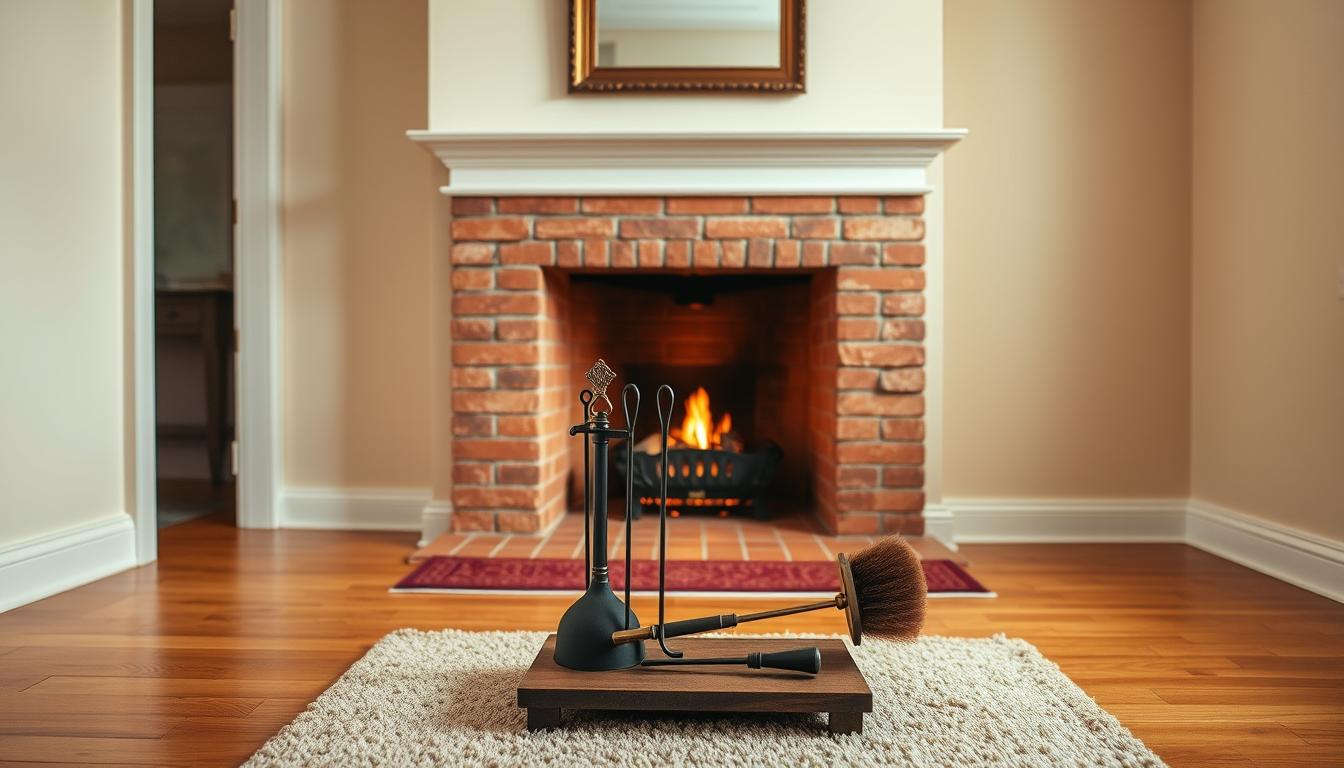
ELFA Cleaning LTD has prepared this short guide to help UK households care for their hearth safely and with confidence. This introduction sets out why the task matters for safety, longevity and the look of your living space.
Safety first: always verify the fire is out and fully cool before you start. Let the appliance fall below 40°C and probe gently for hidden embers with a poker. This staged process helps prevent accidents and keeps debris manageable.
We explain practical tools and materials for the job. Learn why ash vacuums have metal hoses and flame‑resistant catch pans, how steam cleaners loosen stubborn residue on glass, and why burning wood under 25% moisture reduces smoke and soot. These points make the task simpler at home.
Finally, you will find clear guidance on disposing ash, protecting nearby flooring, ventilating the room and choosing the right vacuum, cloths and brushes. Follow these tips and you can repeat the routine easily throughout the year.
Key Takeaways
- Always confirm the fire is fully cool before starting.
- Use an ash vacuum and flame‑resistant gear for safe removal.
- Steam cleaners loosen glass grime; wipe dry afterwards.
- Burn dry wood (≤25% moisture) to reduce soot and smoke.
- Protect floors, ventilate, and follow a simple staged process.
Why cleaning around your fireplace matters for safety and appearance
ELFA Cleaning LTD prioritises homeowner safety while helping you keep a tidy, welcoming hearth. A well‑kept hearth lowers the chance of stray embers and reduces soot build‑up that blackens surfaces and harms air quality.
Common risks: soot, embers, dust and moisture
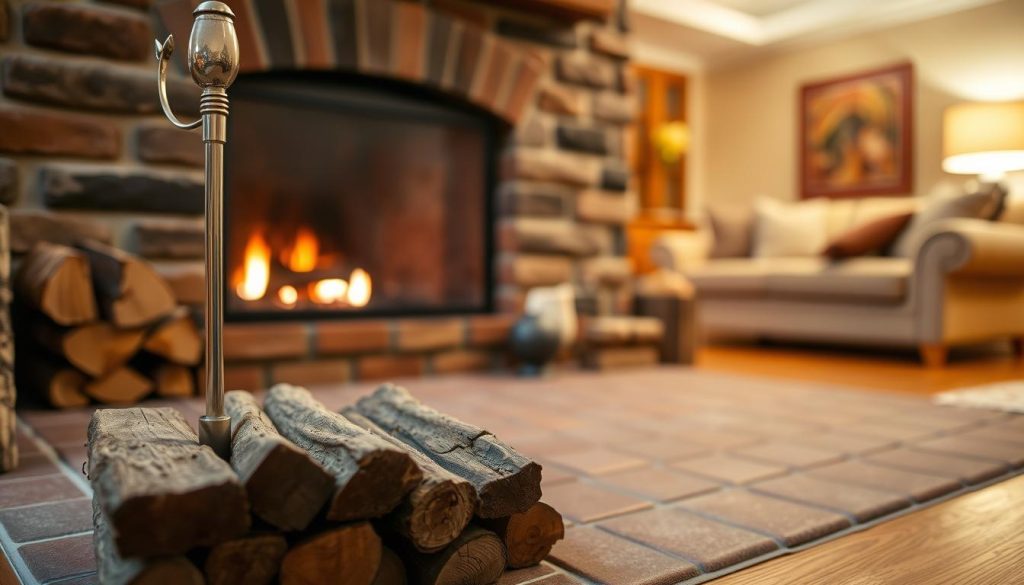
Soot and airborne dust can irritate lungs and soil soft furnishings. Damp fuel raises soot levels and dulls stone and metal finishes.
Legally in the UK, firewood must be under 25% moisture. Using seasoned wood cuts soot and saves you time on future upkeep.
“Always wait until ash is cool — below 40°C — before moving it.”
How often to attend to the area
Do a quick tidy after heavy burning weeks. During peak season, plan a more thorough monthly clear‑out. For lighter use, a seasonal check is usually enough.
- Make sure there are no hidden embers before work starts.
- Ventilate the room and keep children and pets away.
- Wood‑burning setups need more frequent attention than gas models due to ash and soot.
Vigilant upkeep preserves finishes and protects flooring, keeping the hearth presentable between deep cleans.
Essential tools and products to make the process easier
A well-chosen set of tools makes the task quicker and reduces risk. ELFA Cleaning LTD recommends equipping yourself with safe, effective kit before you start.
Ash vacuum versus household vacuum
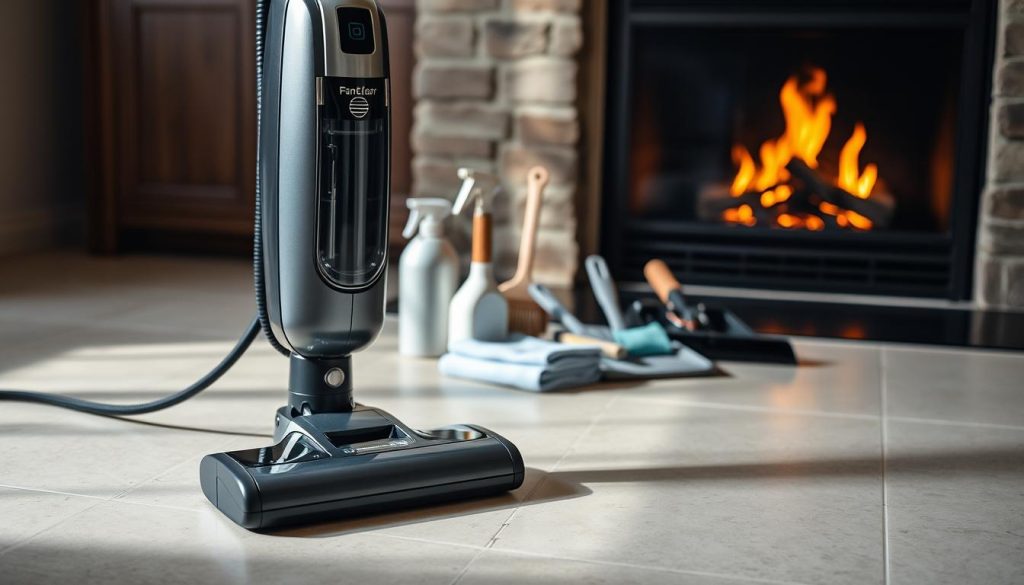
Use a dedicated ash vacuum for this area. Household vacuums clog on fine ash and can suffer motor failure.
An ash vacuum has a metal hose, flame‑resistant catch pan and fine filters. Some models offer a reverse‑airflow filter‑clean function to keep suction steady during a longer job.
Soft cloths, brushes and useful attachments
Choose a kit with a soft brush, a narrow crevice tool and a small hand brush for controlled sweeping. Add a hard‑floor attachment to pick up chips and stray debris without scattering dust.
Choosing stone-safe products and when to avoid chemicals
Match your cleaners to the surface. For natural stone use pH‑neutral or stone‑safe products; for glass use a specific fireplace cleaner to avoid film.
“Pick products that suit the surface — it saves time and prevents damage.”
- Keep mild soap for general wipe‑downs and T.S.P. in warm water for stubborn marks, rinsing thoroughly.
- Create a simple caddy: gloves, microfibre cloths, bin liners and key products to hand.
How to clean around fireplace: step-by-step
Start with a safety-first plan. Allow the chamber to cool for several hours and only begin when the ash temperature is below 40°C. Use a poker to probe for any hidden embers and make sure the area is safe to approach.
Preparation and protection
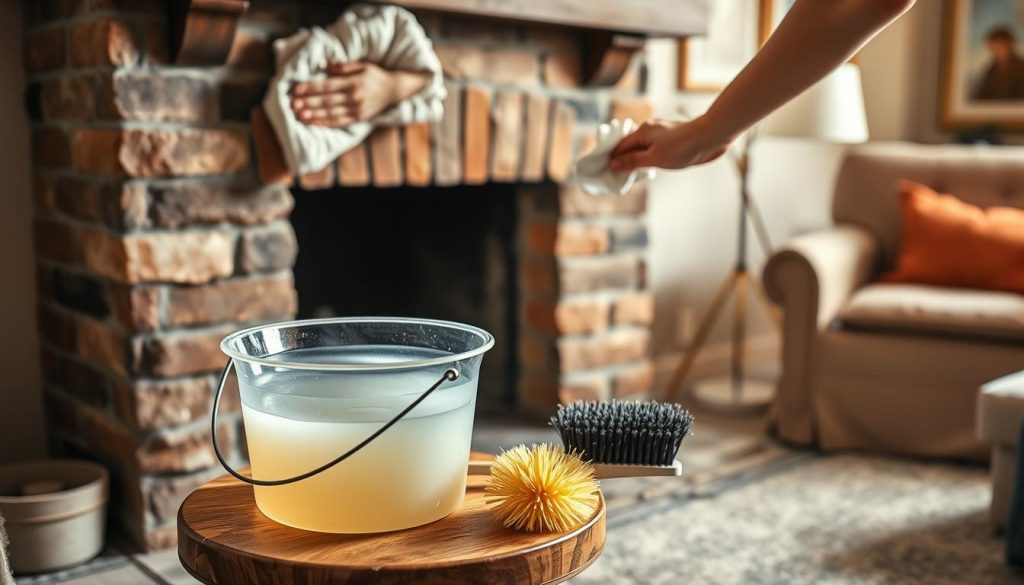
Lay protective sheeting around the hearth and open a window for ventilation. Wear gloves and a dust mask to reduce inhalation of fine dust.
Removing ashes and larger debris
Use only the metal hand tube on an ash vacuum to pick up ashes slowly so you do not stir dust. Remove larger debris by hand or with a small brush to avoid blocking the vacuum.
Treating soot, stains and rust
For stone, dab a mild solution or a T.S.P. mixture on stubborn soot marks, leave briefly, then rinse thoroughly. For rust on cast iron, rub gently with wire wool and a little white vinegar, then dry and polish the grate.
Final wipe-down and waste disposal
Clean glass last with a steam pass or a fireplace glass cleaner, then finish with a dry cloth to prevent streaks. Empty the ash catch pan by inverting it into a bin liner before sealing and binning; do not store ash indoors.
ELFA Cleaning LTD recommends this staged process to protect finishes and keep the hearth ready for the next use.
Cleaning methods by fireplace material and finish
Materials vary widely, so treat each surface with methods suited to its makeup. ELFA Cleaning LTD offers tailored tips to preserve finishes and limit future maintenance.
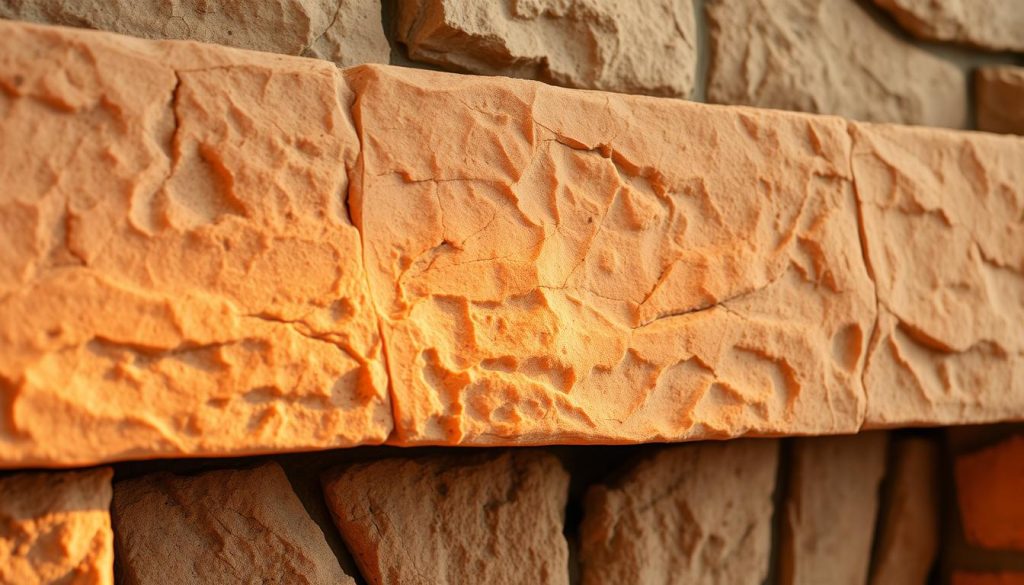
Stone and masonry
Use a mild soap or multi‑purpose solution for routine care. For stubborn soot or marks, apply a T.S.P. and warm water mix, leave for about ten minutes, then rinse with plain water.
Limestone surrounds
Limestone is porous. Wipe gently with a soft microfibre cloth and avoid strong or waxy cleaners that can darken the area. Apply a suitable sealer annually to guard the finish.
Cast iron
Keep cast iron dry and avoid soaking it. Lift light marks with a dry wipe. Remove rust with wire wool and, if needed, dab a little white vinegar before polishing with grate polish to protect the metal.
Marble, micro marble and granite
Dust often and blot spills promptly. For marks, use a dish detergent solution. Tougher stains respond to a paste of one part detergent to two parts baking soda left to sit, then wiped and dried. Micro marble has added resin and resists stains better, but stay gentle.
“Treat each material with care to keep surfaces looking their best.”
- Avoid acidic, abrasive or oil‑based cleaners on natural stone to prevent etching.
- Check whether your surround arrived pre‑sealed and plan resealing based on use.
Glass care: keeping fireplace glass clear and streak-free
A clear panel gives you a better view of the flame and helps spot issues early. Always start with safety: turn the unit off and allow it to cool fully. For gas models, shut off the gas supply before removing any panels.
Handle panels with care. Follow the appliance manual when removing glass and rest panels on a soft towel. Use two hands to lift and protect the edges to avoid chips or cracks.
Turning off gas, removing panels and using the right cleaner
Use a dedicated fireplace glass cleaner on the inner face to prevent hazing or chemical reactions with combustion residues. Avoid ammonia-based window sprays; they can damage coatings and reduce clarity.
When steam cleaners and dry cloths work best for stubborn residue
Dust decorative logs or pebbles with a soft brush before refitting so loose particles do not resettle on the glass. For baked-on deposits, a gentle pass with a steam attachment lifts deposits effectively.
- Wipe immediately with a dry cloth after steaming for a streak-free finish.
- Avoid excessive water on seals and frames to protect gaskets and coatings.
- Refit panels securely per the manual and test the flame picture to ensure correct seating.
“Use the right product and handle panels gently — it keeps the view clear and the unit safe.”
Pro tips to reduce dirt build-up and clean faster next time
ELFA Cleaning LTD shares simple habits that save you time between deep cleans. A few smart choices at home make regular maintenance quick and effective.
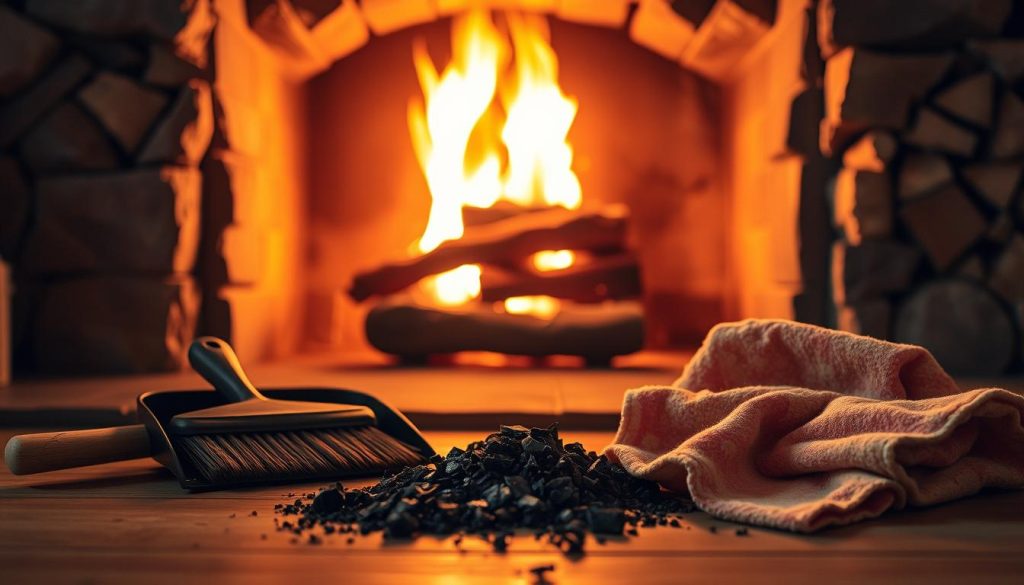
Fuel and moisture: why dry wood matters for soot and smoke
Choose seasoned logs at or below 25% moisture. Drier wood burns hotter and produces less soot, so you spend less time removing deposits from your hearth and glass.
Store logs off the ground in a ventilated, covered spot. Good airflow and protection from rain help timber dry evenly and perform better in UK fireplaces.
Preventative habits: coasters, quick spill response and regular dusting
Adopt short daily tasks to keep dirt and dust at bay. A fast sweep with a soft brush and a quick wipe of mantels prevents heavy build‑up.
- Use coasters on mantels and wipe spills immediately to avoid marks.
- Place a small mat by the hearth to catch chips; shake it outside regularly.
- Schedule five‑minute upkeep sessions — they save far more time than sporadic deep scrubs.
- Keep a compact kit at home with cloths, a brush and approved products for quick action.
“Short, regular habits mean less scrubbing and a tidier home overall.”
Conclusion
Routine care protects every surface and saves you time. Match the product or solution to the material and use a soft cloth or a small brush for gentle work. Let the unit cool for several hours before handling ashes or debris, and use an ash vacuum with a metal hose to manage fine dust safely.
ELFA Cleaning LTD encourages simple, regular habits so your fireplace remains a standout feature at home. Tackle stains methodically—use a mild paste for stone, remove rust with wire wool and a touch of vinegar, and finish glass with a steam pass or a dedicated cleaner followed by a dry cloth.